Description
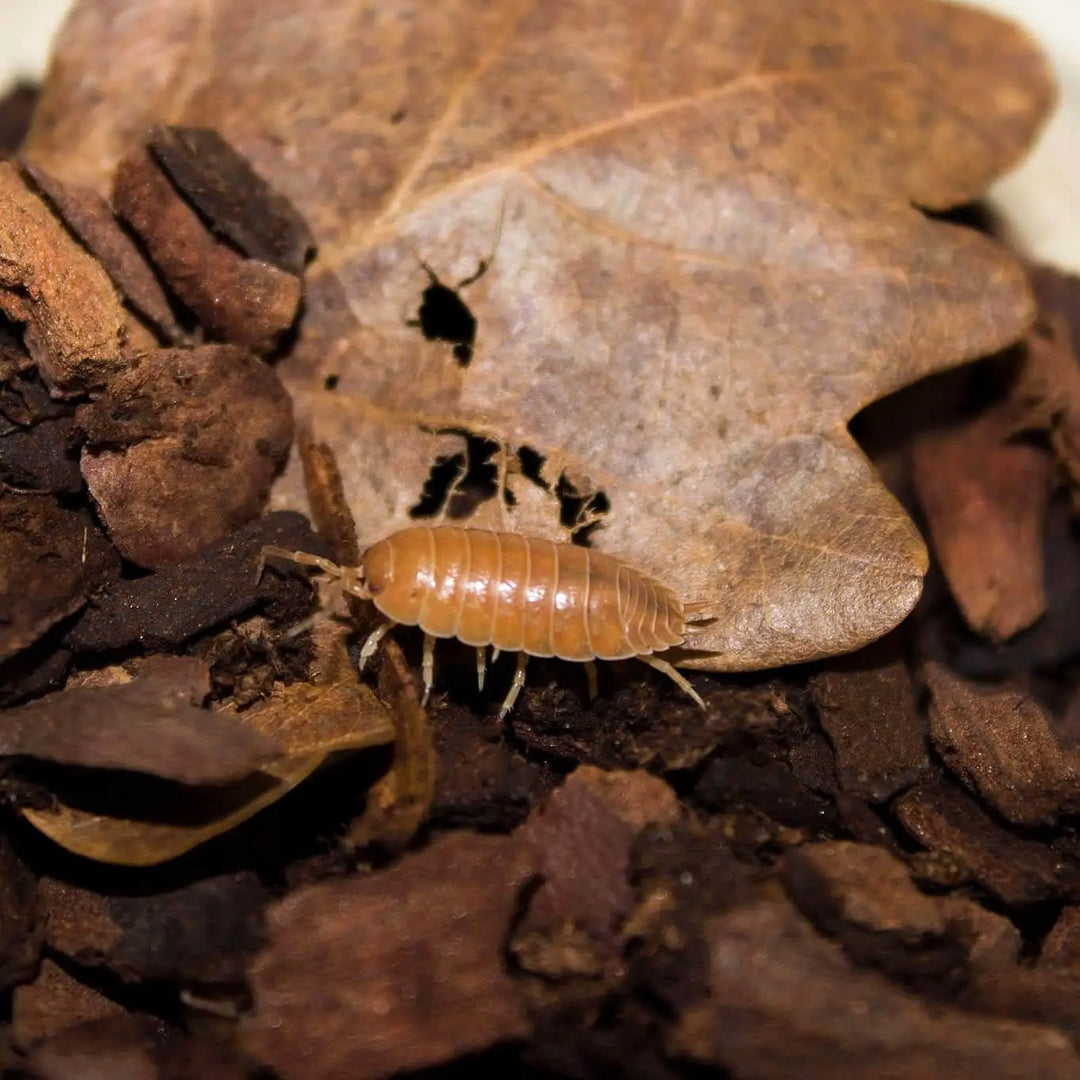
Giant Orange Woodlice (Porcellio sp.) are one of the larger species of isopod commonly used as terrarium custodians or 'clean-up crew' and live and breed well in bio-active set-ups. As adults, they may attain a length of up to 18mm long. Giant Orange Woodlice are also useful as a livefood for many reptiles and amphibians and have the advantage of a high calcium content due to their calcarious exo-skeleton. If they are to be used as food, they are best served up in a smooth-sided dish in much the same way as mealworms or calci-worms. To thrive and become established in the terrarium, they need to be in a constantly damp and humid microclimate which normally means that they hide away for much of the time under branches, rocks or within the substrate. They are supplied in tubs as a starter culture of various sizes.
Your woodlice will be delivered in a plastic container. The bottom of the tub is covered in nutrient rich soil based substrate. The sides of the plastic tub are perforated to provide maximum ventilation with minimum risk of escape. The colony is usually hatched in transit and should be fully populated within a week.
To keep the isopods healthy we would recommend you continue to feed them on a nutritious vegetable and fruit diet or with insect food.